

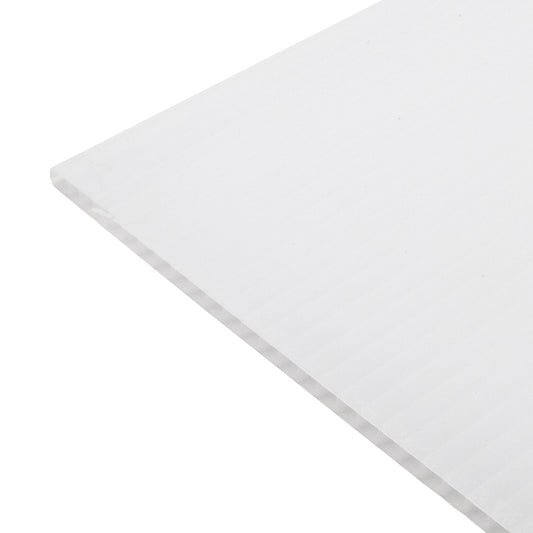
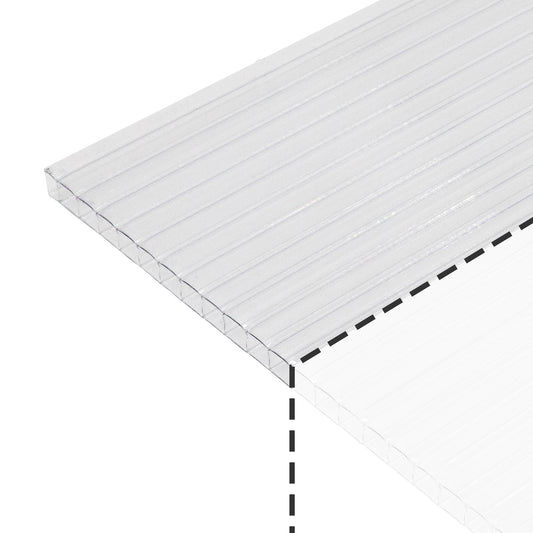
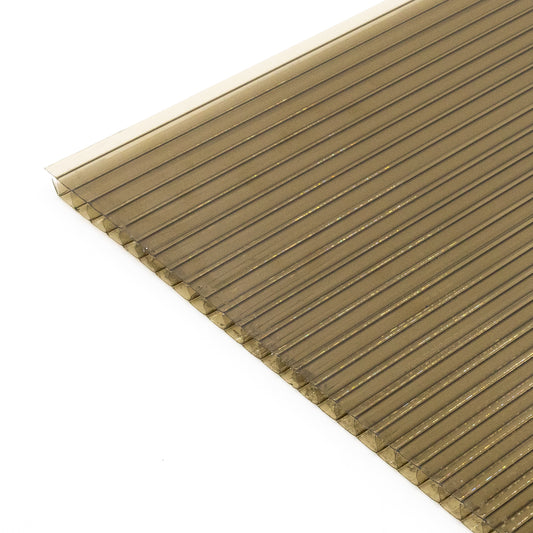
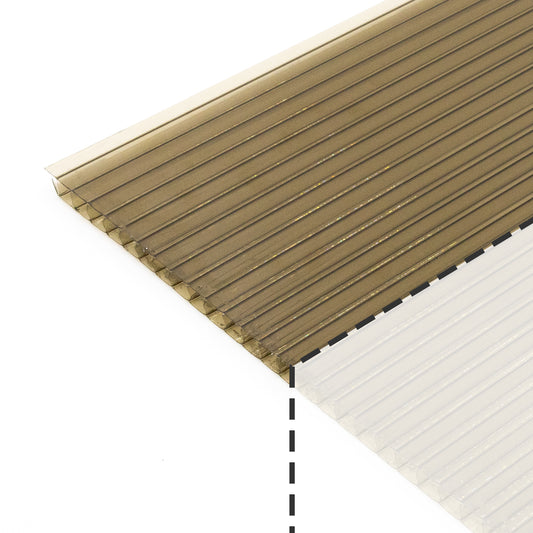
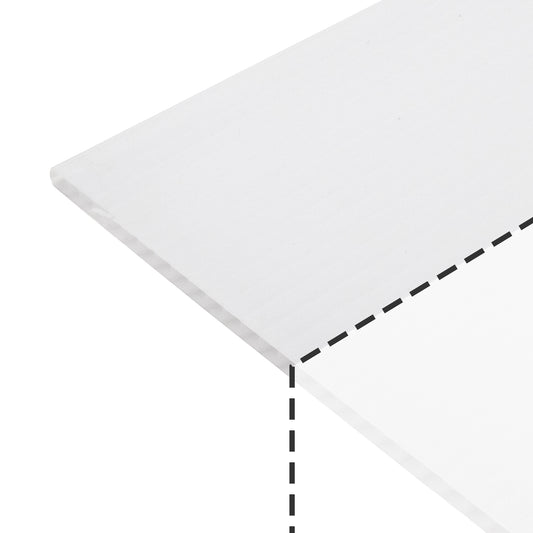
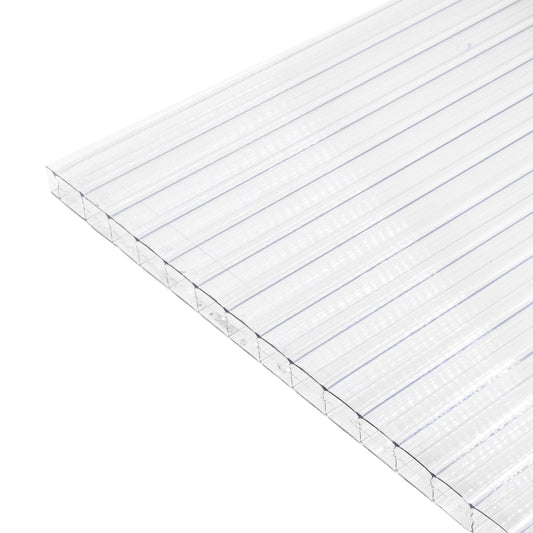
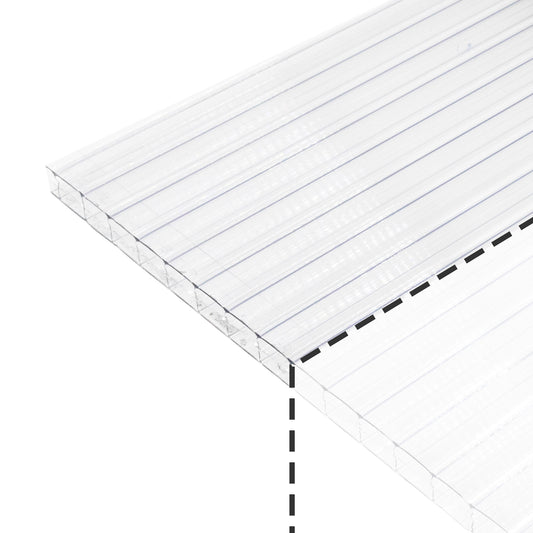
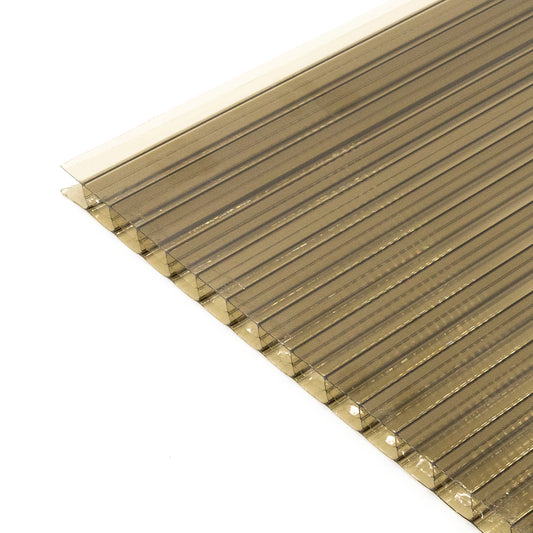
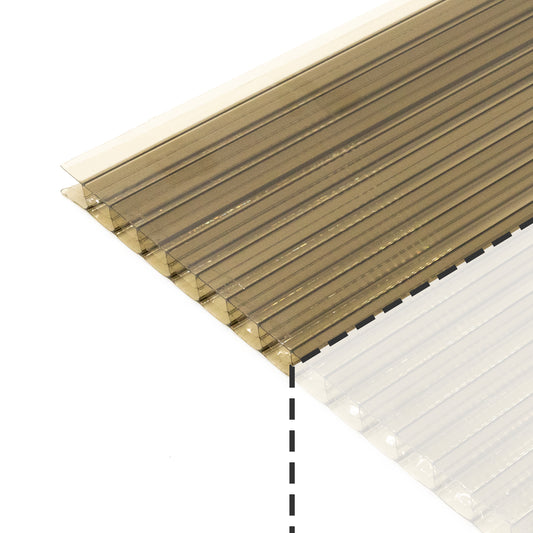
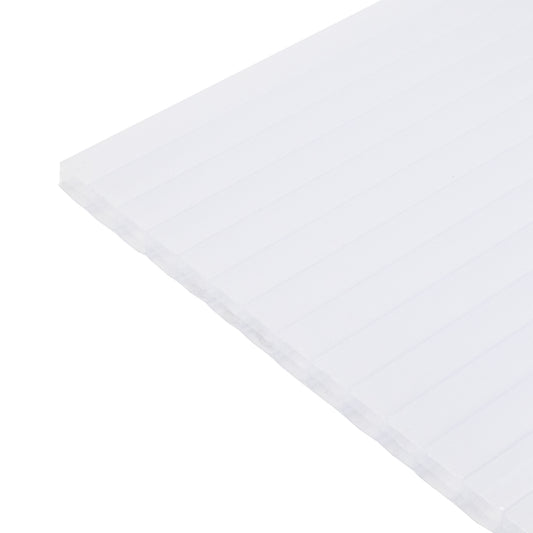
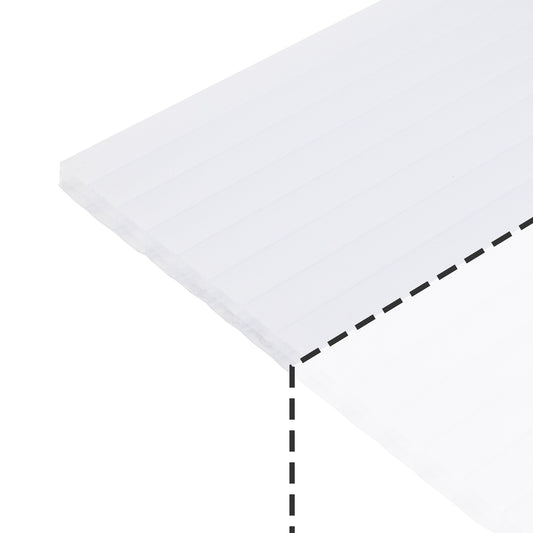
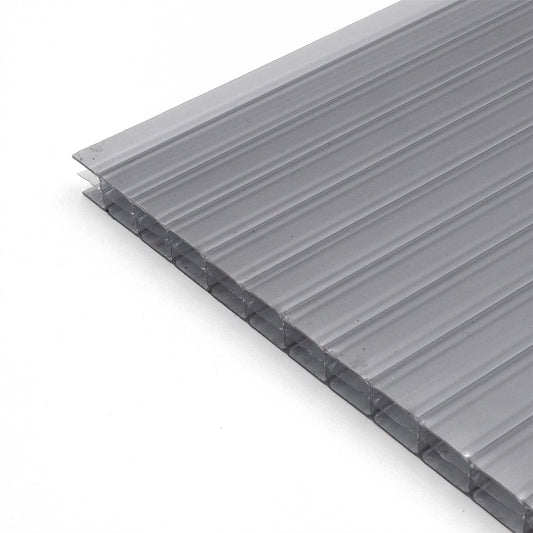
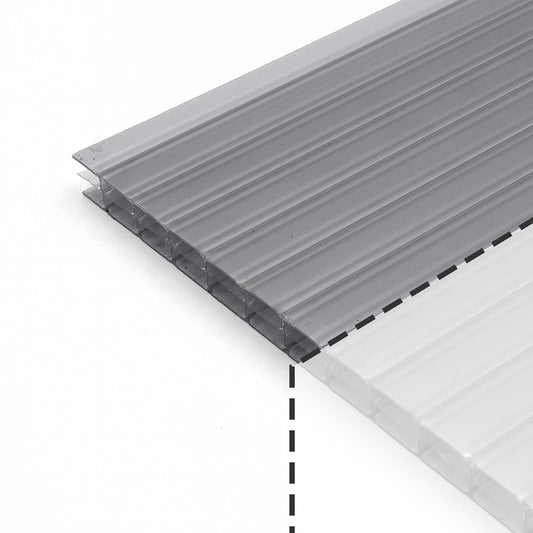
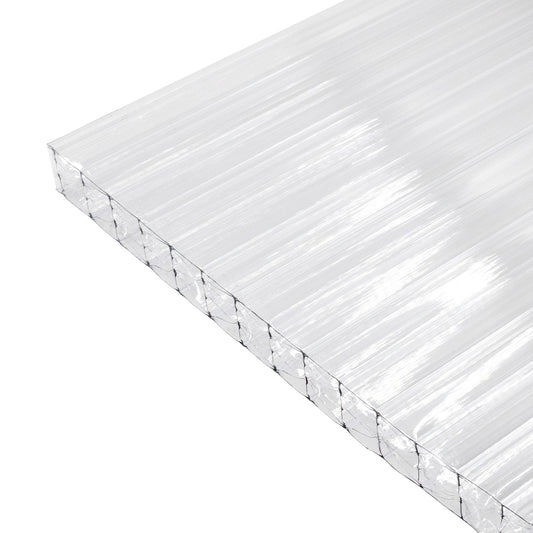
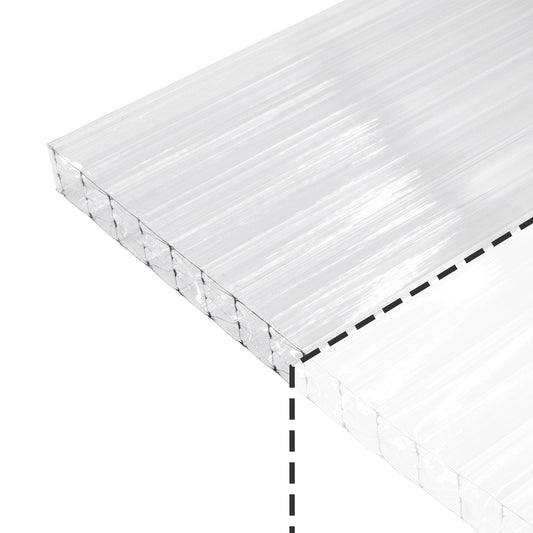
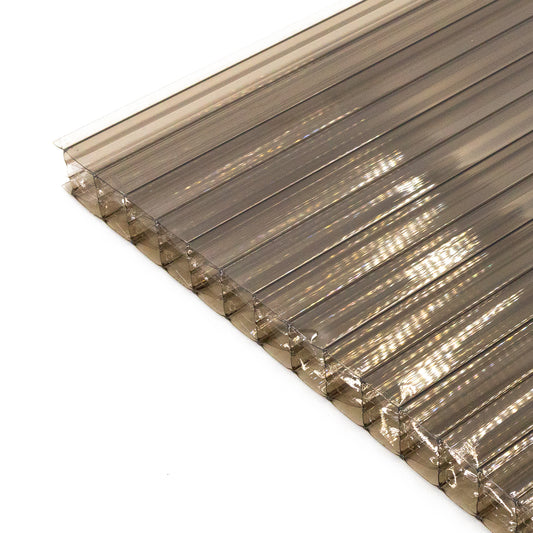
| Detail | Clear | Opal | Bronze |
|---|---|---|---|
| Weight (kg/m) | 1.7 | 1.7 | 1.7 |
| Light Transmission | 81% | 64% | 35% |
| U-value (W/m²K) | 3.02 | 3.02 | 3.02 |
| Sound Reduction (dB) | 19 | 19 | 19 |
| Solar Heat Gain Coefficient | 0.8 | 0.68 | 0.55 |
-
10mm Opal Polycarbonate Sheets
Regular price From £9.50Regular priceUnit price per -
10mm Clear Polycarbonate Cut-to-Size
Regular price £15.84Regular priceUnit price per£0.00Sale price £15.84 -
10mm Bronze Polycarbonate Sheets
Regular price From £9.50Regular priceUnit price per -
10mm Bronze Polycarbonate Cut-to-Size
Regular price £15.84Regular priceUnit price per£0.00Sale price £15.84 -
10mm Opal Polycarbonate Sheet Cut-to-Size
Regular price £15.84Regular priceUnit price per£0.00Sale price £15.84 -
16mm Clear Polycarbonate Sheets
Regular price From £14.80Regular priceUnit price per -
16mm Clear Polycarbonate Cut-to-Size
Regular price £24.66Regular priceUnit price per£0.00Sale price £24.66 -
16mm Bronze Polycarbonate Sheets
Regular price From £14.80Regular priceUnit price per -
16mm Bronze Polycarbonate Cut-to-Size
Regular price £27.06Regular priceUnit price per£0.00Sale price £27.06 -
16mm Opal Polycarbonate Sheets
Regular price From £14.80Regular priceUnit price per -
16mm Opal Polycarbonate Sheet Cut-to-Size
Regular price £24.66Regular priceUnit price per£0.00Sale price £24.66 -
16mm Heatguard Polycarbonate Sheets
Regular price From £18.29Regular priceUnit price per -
16mm Heatguard Polycarbonate Sheet Cut-to-Size
Regular price £29.98Regular priceUnit price per£0.00Sale price £29.98 -
25mm Clear Polycarbonate Sheets
Regular price From £18.05Regular priceUnit price per -
25mm Clear Polycarbonate Cut-to-Size
Regular price £30.07Regular priceUnit price per£0.00Sale price £30.07 -
25mm Bronze Polycarbonate Sheets
Regular price From £18.05Regular priceUnit price per
Compare our Selection of Multiwall Polycarbonate
FAQ
What is the Difference Between Clear, Opal, Bronze and Heatguard?
Multiwall polycarbonate is available in several finishes, each suited to different light, privacy and heat requirements.
Main types
- Clear — maximises light transmission and encourages heat build-up; ideal for cold spots, winter gardens, and industrial or commercial greenhouses
- Opal — diffuses light to eliminate hotspots and glare while providing privacy and a soft light quality
- Bronze — tinted to limit light transmission, minimise glare, and reduce solar heat build-up; a popular choice for sunnier aspects
- Heatguard — uses a special pigment to block ultraviolet and infrared radiation, reducing heat build-up by up to 50% compared to Clear; excellent for south-facing roofs
- Bronze/Opal (dual-tinted) — combines bronze tinting on the outside to limit glare and heat with an opal interior for soft, diffused light and privacy
- Heatguard/Opal (dual-tinted) — combines external Heatguard technology for maximum solar and IR reflection with an internal opal layer for an attractive white finish and diffused light; great for south-facing conservatories
Should I Use Solid or Multiwall Polycarbonate?
Solid polycarbonate — looks like glass, crystal-clear and ultra-tough, but offers lower thermal insulation; best for pergolas, canopies, security glazing, safety screens, and clear flat or curved views
Multiwall polycarbonate — features hollow internal channels, making it lightweight with excellent thermal insulation and diffused light; best for roofs such as conservatories, carports and pergolas
Which Thickness of Polycarbonate Should I Choose?
- 10mm — Best for small, lightweight structures like basic greenhouses or small pergolas- budget and minimal weight
- 16mm — Best for medium outdoor structures like larger carports and pergolas - greater strength and wider rafter spans
- 25mm — Best for large residential roofs such as standard conservatory roofs, canopies, and atriums, offering a strong balance of insulation and cost
- 35mm — Best for maximum performance large structures like heated conservatories or commercial applications requiring the highest level of thermal insulation and superior structural strength.
Which Way Should the Flutes Run When Installing Multiwall Polycarbonate?
Polycarbonate sheets should be installed vertically (downhill from top to bottom), so condensation and rainwater can drain out properly.
Does It Get Hot Under a Polycarbonate Roof?
Yes, it can get very hot under a polycarbonate roof, particularly during warmer months and on south-facing elevations. To minimise heat build-up, it's important to consider both the thickness and the tint of the polycarbonate in relation to the roof's orientation. A south-facing roof is exposed to more direct sunlight throughout the day, so bronze or Heatguard polycarbonate is often recommended to reduce solar heat gain, while a north-facing roof receives less direct sunlight, making clear polycarbonate preferable as it allows more natural light and beneficial solar warmth into the space. There is also a trade-off between heat reduction and light transmission — options that provide greater protection from heat build-up will generally allow less light through, which can make adjacent rooms and shaded areas appear darker during daylight hours.


