

Waste Pipe & Fittings
Our 32mm and 40mm waste water pipes and fittings take a building's wastewater, from sinks, baths, and other waste outlets, and feed it into the drainage network.
Key Features
-

3 Colour Options
Available in white, black or grey
-

High Temp Resistance
Handles boiling kitchen and appliance waste
-

Blockage-Resistant Design
Smooth bore ensures maximum flow
-

Simple Push-Fit Connections
Easy to install, adjust, and reuse


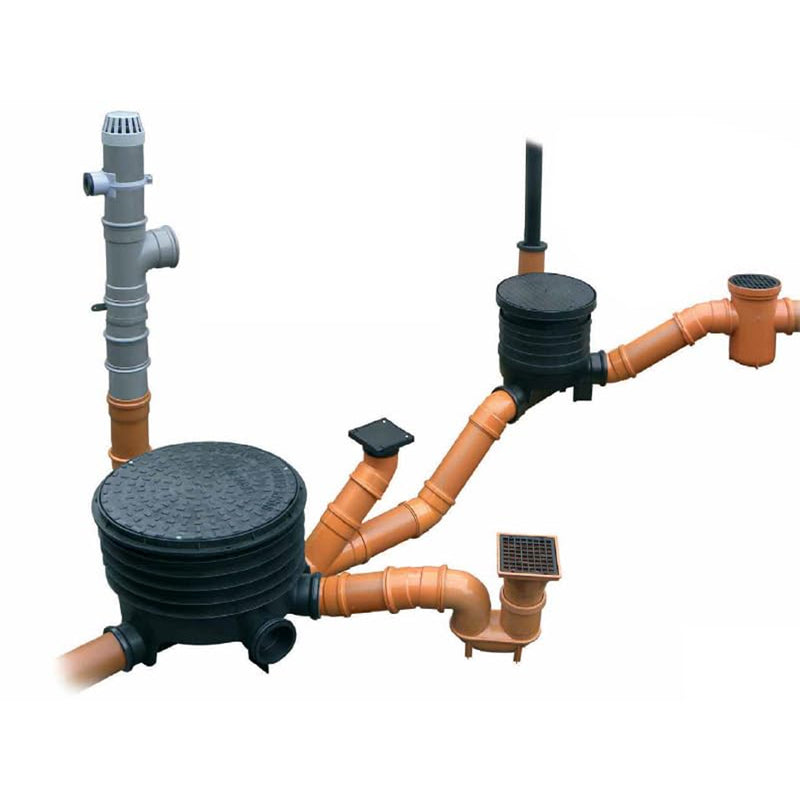
A full waste management system.
We sell an extensive range of guttering, downpipe, soil and waste management systems for domestic, commercial and industrial applications. They are registered in England and achieve some of the highest business management standards (ISO 9901, ISO 14001, OHSAS 18001, ISO 50001).
-
Kayflow 40mm Push-Fit Waste Water Parts
Regular price From £0.91Regular priceUnit price per -
Kayflow 32mm Push-Fit Waste Water Parts
Regular price From £0.91Regular priceUnit price per -
Kayflow 40mm Push-Fit Waste Water Pipe
Regular price From £3.44Regular priceUnit price per -
Kayflow 32mm Push-Fit Waste Water Pipe
Regular price From £3.05Regular priceUnit price per


FAQ
What is the difference between a waste pipe and a soil pipe?
Waste pipes (32–50mm) carry waste (grey) water (liquids from sinks, baths, showers, washing machines, dishwashers, etc.). Soil pipes (110mm) carry soil (black) water containing solids from toilets and bidets. Soil pipes are larger and usually vented through the roof. Waste pipes only handle liquids and light debris.
Should I use 32mm or 40mm waste pipe?
32mm: Suitable only for low-volume fixtures such as bathroom and cloakroom hand basins.
40mm: The best choice for most homes. Use for kitchen sinks, baths, showers, washing machines, and dishwashers. The larger diameter handles higher flow and reduces blockages.
Why use a 45° sweep bend instead of a sharp 90° bend?
Sharp 90° knuckle bends create tight corners where hair, grease, and debris catch easily, leading to blockages. A 45° sweep (or swept 90°) provides a smooth curve for better flow and fewer clogs. Use sharp bends only in very tight spaces directly behind appliances or traps.
What is the difference between push-fit and solvent weld waste pipes?
Push-fit systems are quick, tool-free, and ideal for DIY. Solvent weld creates a permanent glued joint for maximum durability.
Can I mix push-fit pipes with solvent weld fittings?
No. They use different plastics and have slightly different outside diameters, so they won’t seal properly and solvent cement won’t bond. Use a universal compression adaptor instead.
Will modern push-fit fittings work on old plumbing?
Not always. Older UK properties often have imperial-sized pipes (true 1¼" or 1½") with different wall thicknesses. Modern metric push-fit may leak. Use a mechanical compression fitting or rubber adaptor for the most reliable seal on legacy pipework.
How do waste pipes connect to a soil stack or the main drain?
You can connect 32mm or 40mm waste pipes into a 110mm soil stack using a strap-on boss or boss adaptor — this is the most common method. However, waste pipes do not need to connect to a soil stack. They can run directly to the main drain or inspection chamber. Long waste pipe runs may require additional ventilation, such as an Air Admittance Valve (AAV), to prevent trap siphonage and gurgling.
Can I connect a waste pipe to a rainwater downpipe?
Generally, no. Greywater from sinks, baths, showers, washing machines and dishwashers should discharge into the foul drainage system, not a rainwater downpipe or surface water drain. Many rainwater systems lead to soakaways or surface water sewers that are not designed for waste water and can cause pollution if contaminated.
Some older properties have combined drainage systems where rainwater and foul water ultimately share the same sewer. If your property already drains greywater and rainwater into the same combined system, you may be able to connect into the existing drainage network. However, always check your drainage layout or consult a professional or Building Control before making alterations. Never discharge greywater into a dedicated surface water drain or soakaway.


